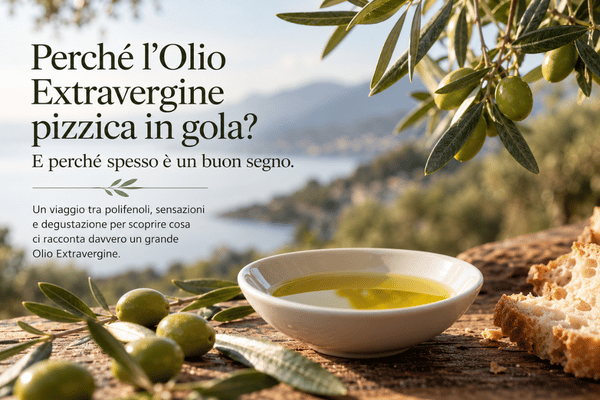
Why does extra virgin olive oil make your throat tingle? And why is that often a good sign?
“This time, I’d like one that’s a little stronger.”
When we opened our store in Lugano, we noticed something right away.
Many customers were looking for gentle oils.
“Not too loud” was a request we heard frequently.
It was understandable. Those who are used to oils with a very mild flavor may find an extra virgin olive oil with a bolder character surprising at first taste.
A few months later, however, we are seeing something very interesting.
The tastes of various customers seem to be changing.
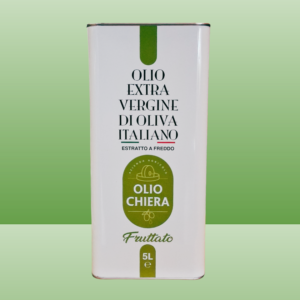
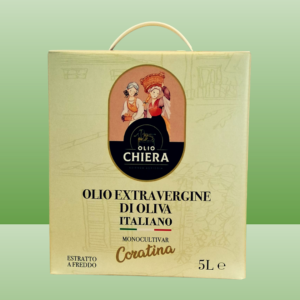
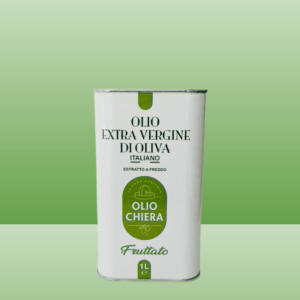
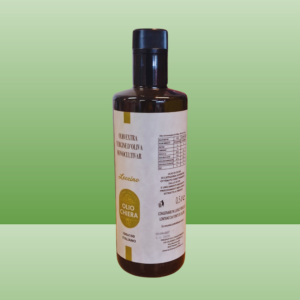
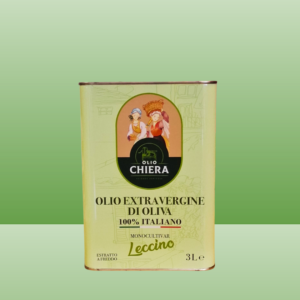
Our “Fruttato” is currently the best-selling olive oil in the store. Next are the organic variety, which has medium intensity, and the Leccino. And more and more people are also curiously trying decidedly bolder oils like Coratina and Geracese.
Yes, there’s another surprise.
Our Geracese Extra Virgin Olive Oil from Calabria— a Slow Food Presidium—is also generating a lot of interest: an oil with a particularly intense character, even more robust than Coratina.
We do not know if there is a single explanation for this development.
But there’s one thing we notice every day.
Once you begin to learn about high-quality extra virgin olive oil, the way you taste it and use it in the kitchen changes.
That bitterness, which may seem unusual at first, begins to take on meaning.
That tickle in your throat—which takes you by surprise the first time—becomes a familiar sensation.
And so it happens that a customer who, a few months earlier, was looking for a light olive oil comes back and tells us:
“This time I’d like one that’s a little stronger.”
But why do some extra virgin olive oils have a tingling sensation?
And above all: does that tingling sensation really mean the oil is better?
The answer is more interesting than a simple yes or no.
First of all: if an extra virgin olive oil has a slight tingling sensation, it doesn’t mean it’s too acidic
Let’s start with one of the most common misunderstandings we encounter.
When a person feels an oil stinging their throat, they might think:
“It’ll be too sour.”
In fact, you can’t taste the acidity of extra virgin olive oil.
Free acidity is a chemical parameter determined through laboratory analysis. It does not correspond to the sensation of acidity that we might perceive, for example, when tasting a lemon or vinegar.
The tingling sensation of extra virgin olive oil has a completely different origin.
And to understand this, we need to talk about some substances that occur naturally in olives.
Polyphenols: The Little Giants of Extra Virgin Olive Oil
When we talk about high-quality extra virgin olive oil, we often hear the term “polyphenols” mentioned.
But what are they?
Simply put, they are a family of compounds naturally present in olives that possess antioxidant properties and also contribute to the sensory characteristics of olive oil.
Along with other compounds, they are responsible for precisely those bitter and spicy sensations we may encounter during tasting.
Their presence varies from oil to oil.
It can vary depending on a number of factors:
- olive varieties;
- degree of fruit ripeness;
- climate and conditions of the growing season;
- time of harvest;
- processing methods and timing;
- oil storage conditions.
And that’s one of the reasons why two extra virgin olive oils can offer completely different experiences.
🫒 From the Oil Mill
Bitter and spicy are not defects.
In the sensory evaluation of extra virgin olive oil, bitterness and pungency are considered positive attributes when they are present in a harmonious way and consistent with the oil’s profile.
This does not mean, however, that an oil must necessarily be very bitter or very spicy to be of high quality. There are excellent delicate extra virgin olive oils and excellent intense extra virgin olive oils.
That tingling sensation even has a name worth remembering: oleocanthal
Among the phenolic compounds found in extra virgin olive oil, there is one that is particularly interesting: oleocanthal.
It is associated with the typical stinging sensation that some oils cause, especially at the back of the throat.
It’s a strange feeling.
Sometimes it doesn’t arrive right away.
Taste the oil: first, you’ll notice the aromas and flavor, and then, after a few moments, you’ll feel that characteristic tingle.
With some oils, it’s light.
With others, it’s quite obvious.
And with particularly strong oils, it can even cause a slight cough.
People who aren’t used to it might find it unpleasant.
Those who, on the other hand, learn about extra virgin olive oil begin to see it simply as one of the many sensory experiences that olive oil can offer.
So, the more an oil stings, the better it is?
No.
And it’s a distinction we care deeply about.
It would be easy to say that a very intense oil is automatically better than a delicate one.
But that wouldn’t be right.
The quality of extra virgin olive oil isn’t measured simply by how intense the tingling sensation is.
An olive oil must be evaluated as a whole: its aromas, purity, balance, cultivar characteristics, absence of defects, and harmony of flavors.
A delicate oil can be extraordinary.
An intense oil can be extraordinary.
They are simply different expressions of the same world.
Learning about olive oil doesn’t necessarily mean preferring a stronger flavor. It means beginning to recognize sensations we weren’t familiar with before and discovering which characteristics we truly enjoy.
That’s exactly what we try to do when we guide someone through a tasting.
Not to tell them which oil they should like.
Help them figure out which one they like.
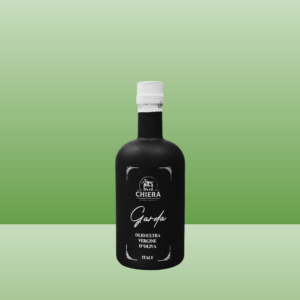
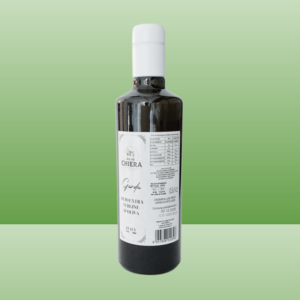
Delicate, Garda, Fruity, Leccino, Coratina: the palate learns to recognize the differences
When we taste several oils one after another, the differences become much more apparent.
A delicate oil complements the dish subtly.
A Fruity wine gradually intensifies its aromatic profile.
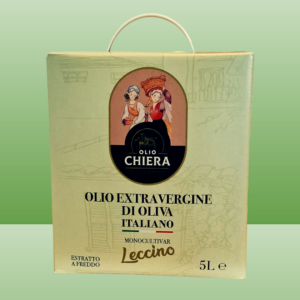
The Leccino variety adds a bolder character while maintaining a good balance.
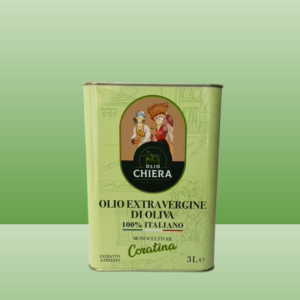
Coratina takes the taste experience to a more intense level, with generally more pronounced bitter and spicy notes.
This is not a quality ranking.
It’s a personality scale.
And it is precisely through comparison that the palate begins to develop.
Something similar happens with wine, coffee, chocolate, or cheese.
At first, we mainly distinguish between what is light and what is strong.
Then, with each taste, we begin to recognize subtle nuances.
That’s where the world of extra-virgin olive oil really gets interesting.
And then there’s Geracese: when olive oil speaks Calabrian
For our family, Calabria is not simply a production area.
This is where our story with olive oil began.
It was 1906 when Grandpa Francesco began producing olive oil in Caulonia, in the Campoli area.
That’s why seeing customers at our Lugano store today take a keen interest in a particularly intense Calabrian olive oil holds special meaning for us.
Geracese, a Slow Food Presidium, is an extra virgin olive oil with a bold flavor.
It’s an oil that doesn’t go unnoticed.
On the palate, it clearly reveals its own personality, and within our range, it ranks among the most intense expressions, surpassing even Coratina in perceived intensity.
A few months ago, we might have imagined that such a robust oil was intended for a small niche group of enthusiasts.
Instead, something different is happening.
Customers get to taste it.
They’re surprised.
And many people choose it.
Perhaps because, once you discover that extra virgin olive oil can have so many nuances, you naturally become curious to explore them.
How to Taste Extra Virgin Olive Oil at Home
You don’t have to be a professional taster to start recognizing these sensations.
You can try a little experiment at home, too.
1. Pour a little oil into a small glass
A small amount is enough.
2. Warm it up slightly with your hand
Hold the glass in the palm of your hand for a few moments. A slight increase in temperature helps you perceive the aromas.
3. Smell it first
Don’t rush to taste it.
Bring the glass close to your nose and simply try to identify what you smell.
Grass? Almonds? Artichokes? Fresh olives?
There isn’t one answer you absolutely have to find.
4. Taste a small amount
Swish the oil around in your mouth and pay attention to the sensations.
You may notice a bitter taste on your tongue.
5. Wait a few seconds
And here’s the interesting part.
Look at what’s happening at the back of the throat.
That’s where the spiciness can come in.
Lightweight.
Medium.
Or decided.
Don’t ask yourself right away:
“Is he good or bad?”
Instead, try asking yourself:
“Do I like this feeling?”
It’s a completely different way of tasting.
Something interesting we’re learning from our customers
The store in Lugano is providing us with a vantage point that is very interesting to us.
Every day, we speak directly with the people and restaurant owners who use our oil.
We’ll let you try some.
Let’s hear their reactions.
And then, a few weeks or a few months later, we see them come back.
Today, our best-selling olive oil in the store is the ” Fruttato,” followed by the “BIO ” and the ” Leccino.” The “Delicato” and “Coratina” are essentially tied, while the “Geracese” is performing in a way that has pleasantly surprised us.
On our e-commerce site, the situation is different.
Here, organic grapes come first, followed by Delicato, Coratina, Leccino, and Garda.
It’s still too early to draw any conclusions.
But there is a clear difference between the two ways of shopping.
We can try some together at the store.
Not online.
And that’s also why we decided to write articles like this one.
To try to convey, at least in part, the experience we have every day behind the counter of our store to those reading this from home.
The Questions We’re Asked Most Often
If the oil stings, does that mean it’s rancid?
No. The free acidity of extra virgin olive oil is a chemical parameter measured in a laboratory and does not correspond to the pungent sensation felt in the throat.
Are bitterness and spiciness flaws?
No. In the sensory analysis of extra virgin olive oil, these are considered positive attributes. However, they must be interpreted within the context of the oil’s overall profile.
Does a mild oil have lower quality?
Absolutely not. Intensity and quality are two different concepts. There are excellent extra virgin olive oils with a delicate profile, and excellent oils with a very intense character.
Why does Coratina have such a sharp, tangy taste?
Coratina is a cultivar known for producing a profile rich in phenolic compounds and particularly distinctive bitter and spicy notes. However, the intensity can vary depending on the vintage, the time of harvest, and the processing method.
Can you get used to more intense olive oils?
Rather than “getting used to” them, we prefer to talk about learning to recognize them. With experience, the palate becomes better at distinguishing bitterness, spiciness, aromas, and intensity, and it becomes easier to understand which characteristics you prefer.
In the end, the choice is yours
When a customer walks into our store and asks us which oil is the best, our answer is always the same.
It depends.
It depends on your taste.
It depends on what you’re cooking.
It depends on what you’re looking for in an extra virgin olive oil.
Maybe today you’d prefer a mild oil.
Tomorrow, you might fall in love with a Fruity.
One day you might try a Coratina and discover that the very tingling sensation that initially surprised you has become exactly what you’re looking for.
Or you could try a Geracese and discover a character you never imagined.
There is no mandatory route.
There’s only one thing worth doing.
Try it.
Because you can’t tell what extra virgin olive oil is just by looking at a bottle.
It is experienced through its aromas, taste, and the sensations it evokes.
And perhaps that is precisely what makes olive oil so wonderful: even after more than a century of producing it, it still continues to surprise us.
Oil shouldn’t just be used to season a dish. It should have a story to tell.
If, on the other hand, you want to find out which intensity and which extra virgin olive oil are best suited to your cooking, you can also read our guide “Which Extra Virgin Olive Oil Should You Choose?”
Agricola Chiera — from our fields to your table, since 1906.